
 Find Food
 Get Involved
 Resources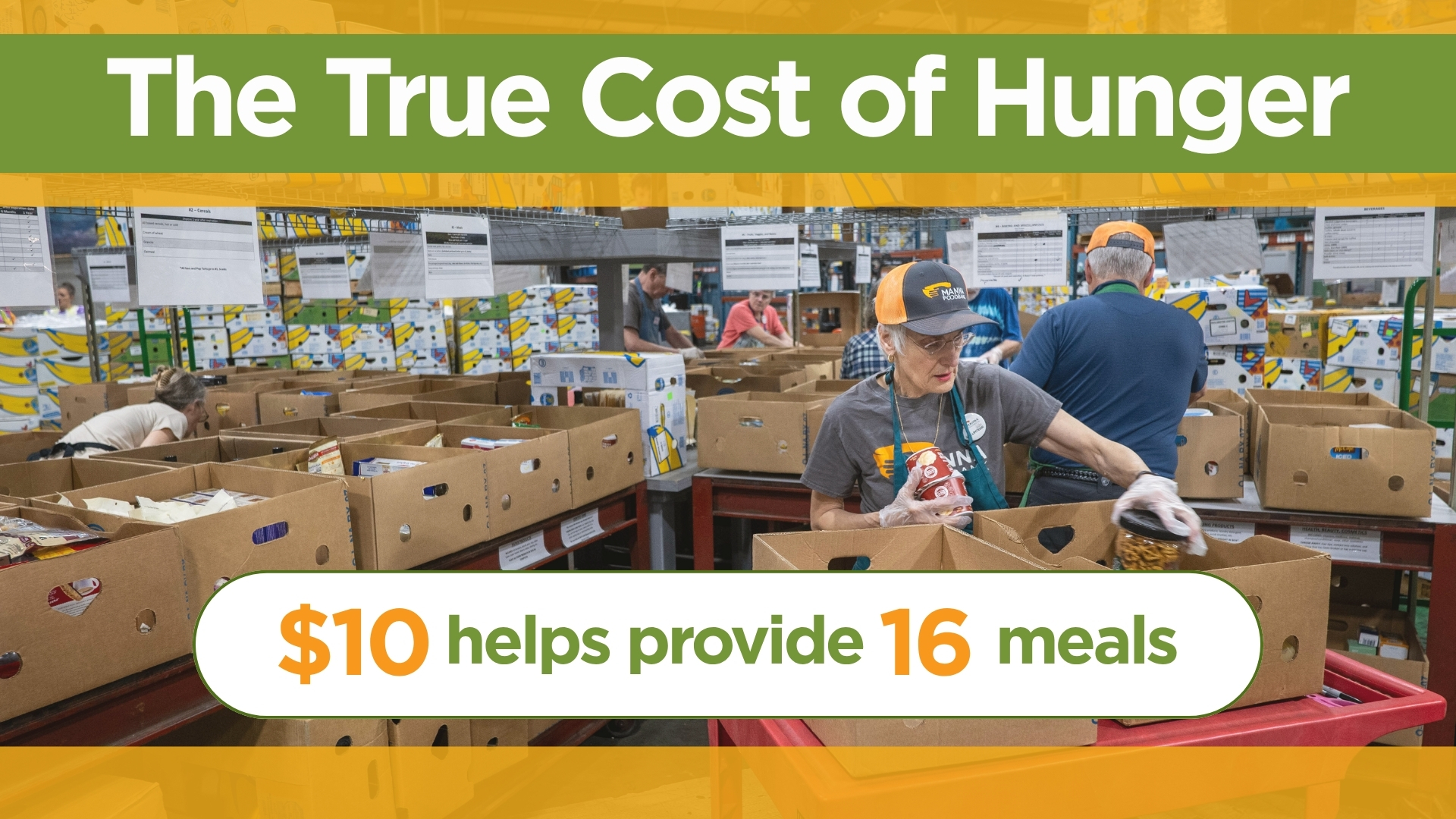
The True Cost of Hunger
For more than 20 years, MANNA has used a meals-per-dollar calculation to help show how generosity becomes food on the table for neighbors across Western North Carolina. Today, MANNA is updating that calculation to better reflect the reality of hunger relief in this moment.
A $10 gift helps provide 16 meals.
This update does not mean MANNA’s mission has changed. It means our calculations are aligning with the world we are operating in now.
The need across our region has reached historic levels. Food donations and food support are down. MANNA is purchasing significantly more food to keep nutritious food moving through our partner network. Even so, a $10 gift helping provide 16 meals remains a powerful impact because MANNA can stretch each gift through wholesale buying power, sourcing relationships, volunteers, partner agencies, purchasing strategies, and regional distribution infrastructure.
Need Is Rising
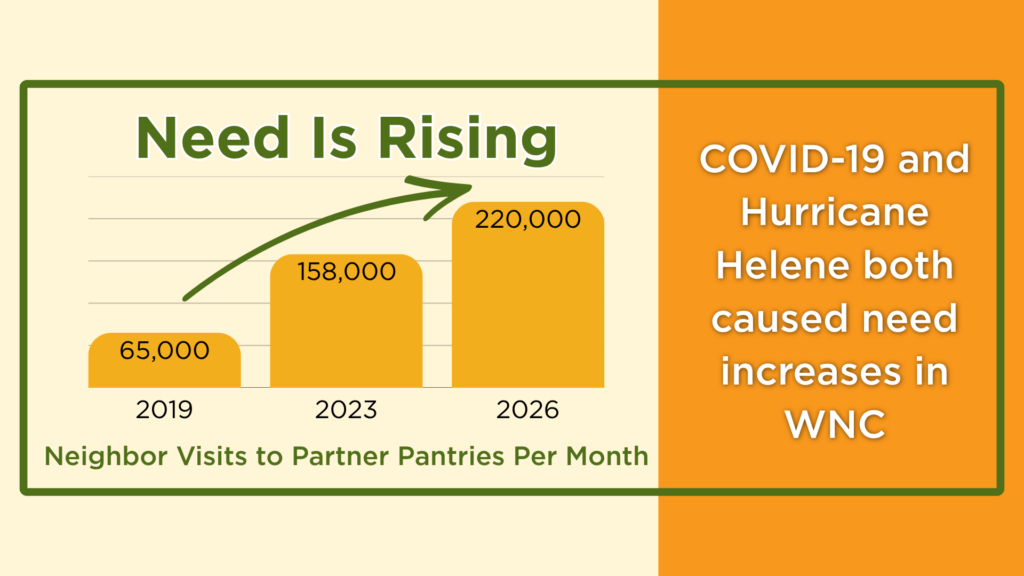
Before COVID in 2019, neighbors made about 65,000 monthly visits to MANNA’s food distribution network. In 2023, right before Hurricane Helene, that number had grown to 158,000 monthly visits. Today, neighbors are making more than 220,000 visits each month across MANNA’s network.
That increase reflects the reality many families across Western North Carolina are facing. Rising costs, the long-term effects of the pandemic, and the impact of Hurricane Helene have all placed additional pressure on households, farms, businesses, and communities across the region.
MANNA is serving more neighbors than at any other point in its history. Updating the impact metric helps provide a more accurate and transparent picture of what it takes to respond to this level of need.
Food Support Is Down
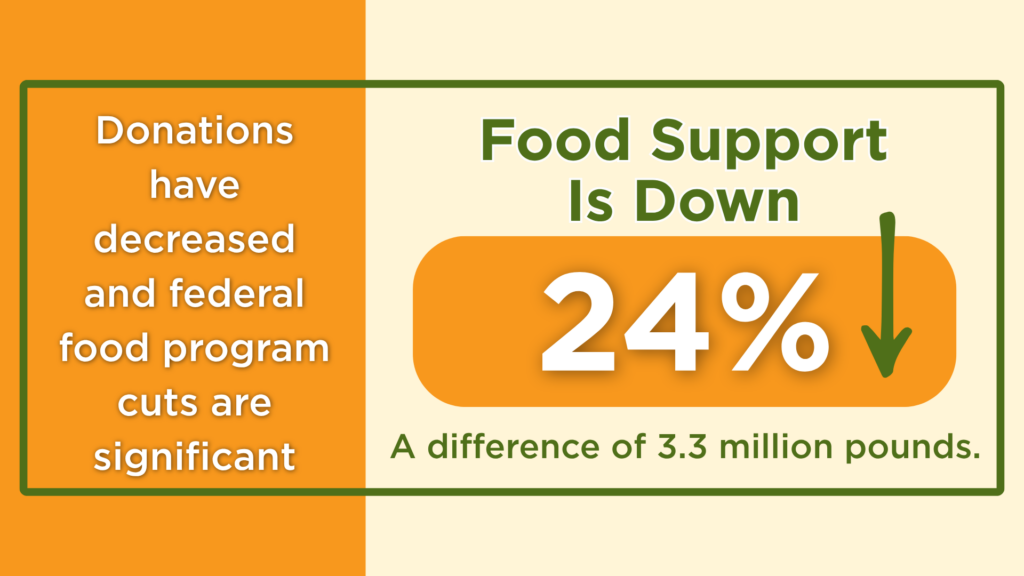
As need is rising, the way food moves into and through MANNA has changed. Over the past two years, food donations and food support from retail partners, federal sources, community partners, individuals, and food drives decreased by 24%, a difference of more than 3.3 million pounds.
The reduction in federal food support is especially significant. It has deepened the gap between available food resources and the growing number of neighbors turning to MANNA’s network for help.
Hurricane Helene also intensified many of these challenges. The storm affected MANNA’s operations, but it also affected community infrastructure, farms, retailers, roads, and supply chains across the region. Some of the partners who help make food donations possible had less capacity to donate at the same time more neighbors needed support.
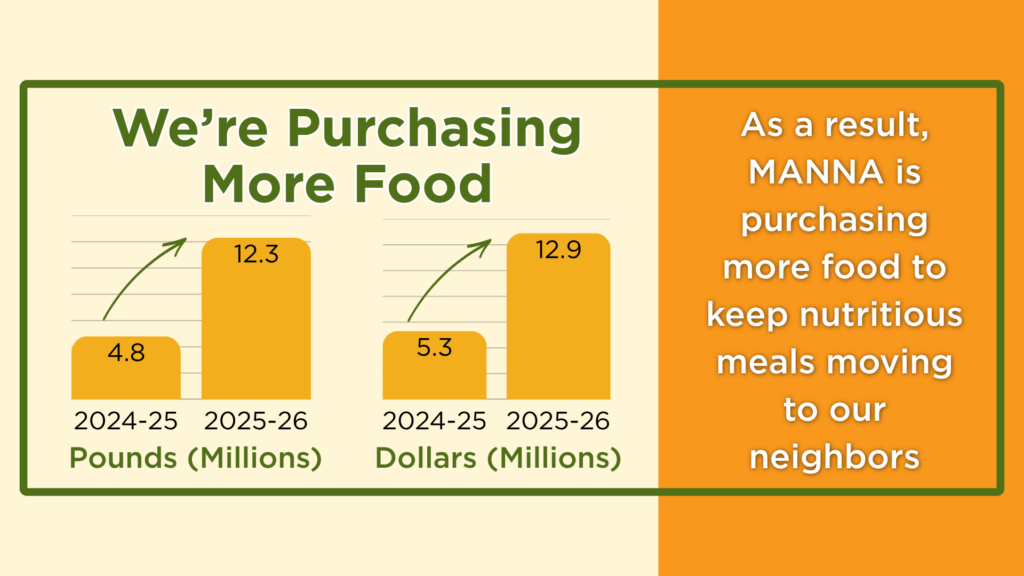
We're Purchasing More Food
Because need is rising and food support has become less predictable, MANNA is purchasing significantly more food to keep nutritious food moving through the partner network.
Over the past two years, MANNA’s purchased food pounds increased by 156%, growing from approximately 4.8 million pounds to more than 12.3 million pounds. During that same period, food purchasing dollars increased by 142%, growing from approximately $5.3 million to nearly $12.9 million.
Purchasing more food is not a sign of failure. It is a necessary and strategic part of meeting the need in today’s hunger-relief environment. Purchasing food helps MANNA provide more consistent access to nutritious staples like fresh produce, eggs, dairy, meat, cheese, and protein.
Financial gifts are especially powerful because MANNA can make those dollars go farther than most individuals can when buying groceries on their own. Through wholesale buying power, sourcing relationships, volunteers, partner agencies, and regional distribution infrastructure, MANNA can stretch each gift and move food efficiently at a scale that individual grocery purchases cannot match.That does not mean food donations are unimportant. Food donations remain a valuable part of MANNA’s work. But financial gifts give MANNA the flexibility to purchase the foods most needed by partner agencies and neighbors, fill specific gaps, respond quickly when demand changes, and source nutritious items in larger quantities.
This kind of purchasing is also an investment in our region. When MANNA purchases food from local and regional farms and food producers, we help keep nutritious food moving to neighbors while also supporting the people and communities who grow and produce it.
Your Support Still Makes a Powerful Difference
A $10 gift helping provide 16 meals is still an incredible impact.
Most individuals could not turn $10 into 16 meals on their own, especially as grocery costs remain high. MANNA can stretch each gift through wholesale buying power, sourcing relationships, volunteers, partner agencies, purchasing strategies, and regional distribution infrastructure.
This work happens because of a community of people working together: donors, volunteers, food distribution partners, farms, food donors, funders, advocates, and neighbors who believe in a stronger, more nourished Western North Carolina.
We are sharing this update because transparency matters. You deserve an accurate picture of what it takes to meet hunger in Western North Carolina today, and you also deserve to know that your support continues to make a meaningful difference.
Together, we are providing food for today and helping build a more resilient future for our region.
Frequently Asked Questions
Why is MANNA updating its impact metric?
MANNA is updating the metric because the new calculation better
reflects the current cost of food, the scale of need in Western
North Carolina, and the comprehensive work required to provide food
across the region.
For more than 20 years, MANNA has used a meals-per-dollar
calculation to help donors understand the impact of financial
gifts. Today, saying $10 helps provide 16 meals
gives a more accurate picture of what it takes to nourish neighbors
in the current hunger-relief environment.
Does this mean my donation has less impact?
No. Your donation still has significant impact.
A $10 gift helping provide 16 meals is still a powerful multiplier.
Most people could not turn $10 into 16 meals on their own,
especially as grocery costs remain high. MANNA can stretch each
gift through wholesale buying power, sourcing relationships,
volunteers, partner agencies, food purchasing strategies, and
regional distribution infrastructure.
The updated metric helps us be more accurate and transparent about
that impact.
Why does a financial gift go further through MANNA?
Financial gifts allow MANNA to purchase food strategically and
efficiently. Because MANNA buys food at scale, works through
sourcing relationships, relies on volunteers, and distributes food
through a large partner network, donor dollars can go farther than
most individual grocery purchases.
Financial gifts also give MANNA flexibility. They allow us to
purchase the specific foods partner agencies need most, respond
quickly when demand increases, and keep consistent, nutritious food
moving across Western North Carolina.
And because MANNA is a 501c3 registered nonprofit, a financial gift can be a smart giving strategy for you. In addition to cash, MANNA can accept stock gifts, bequests, required minimum distributions and more. Learn about how you can give here.
Are food donations still helpful?
Yes. Food donations remain an important part of
MANNA’s work and help keep food moving to neighbors across the
region.
At the same time, financial gifts give MANNA more flexibility to
fill specific gaps, purchase high-demand nutritious foods, and
source items in larger quantities. Both food donations and
financial gifts are valuable, and both help nourish neighbors.
Is MANNA becoming less efficient?
No. The change does not mean MANNA is becoming less efficient.
It means the food-sourcing environment and the scale of need have
changed. Food donations and federal food support are down, MANNA is
purchasing significantly more food to fill the gap, and more
neighbors are turning to the network than ever before. The updated
metric reflects the real cost of doing the work today.
Why is MANNA purchasing more food?
MANNA is purchasing more food because the need is high, food
donations and federal food support are down, and partner agencies
need consistent access to nutritious staples like produce, eggs,
dairy, meat, cheese, and protein.
Purchasing food helps MANNA provide more consistent, nourishing
options to neighbors. It also allows MANNA to use its wholesale
buying power and sourcing relationships to stretch donor dollars
farther than most individuals can on their own.
Strategic food purchasing also allows MANNA to support local and
regional farms, keep dollars circulating in the community, and
strengthen the food system for the future.
Is this change connected to Hurricane Helene?
Partly, but not entirely.
Hurricane Helene intensified the challenges facing Western North
Carolina and MANNA’s operations. MANNA lost two warehouse
facilities, equipment, storm-prepared food inventory, IT
infrastructure, and the Reclamation Center, which had rescued more
than 2 million pounds of food each year.
The storm also affected many of the farms, retailers, and food
partners that help make local food donations possible. As farms,
businesses, roads, supply chains, and community infrastructure were
damaged, some partners had less capacity to donate food at the same
time more neighbors were turning to MANNA’s network for help.
But the need was already rising before the storm. Before COVID,
MANNA’s network averaged 65,000+ monthly visits.
Before Hurricane Helene, that had grown to
158,000. Today, the network is seeing more than
220,000 visits each month.
The updated metric reflects both long-term trends and the current
reality of a region still recovering.
Why does federal food support matter?
Federal food support is an important part of the hunger-relief
system. When that support becomes less reliable or decreases, food
banks must work harder to fill the gap.
For MANNA, the reduction in federal food support is especially
significant because it is happening at the same time more neighbors
are turning to the food distribution network for help. That means
MANNA must purchase more food to keep consistent, nutritious food
moving to partner agencies and communities across Western North
Carolina.
How can I help?
Community support remains essential. Financial gifts, food
donations, volunteering, advocacy, and community partnerships all
help keep food moving across Western North Carolina.
A $10 gift can still help provide 16 meals.
Volunteers help MANNA stretch resources and move food efficiently.
Food distribution partners help ensure that food reaches neighbors
in communities across the region.
Together, we can continue meeting today’s urgent hunger needs while
helping build a stronger and more resilient food system for the
future.
Change Starts With Staying Informed
Sign up to get MANNA news, impact stories, and simple ways to make a difference.
"*" indicates required fields